
At a Glance
The best small garden ideas are less about fitting everything in and more about making every element work harder. Thoughtful planting, clear views, privacy, seating and well-chosen materials can help a compact garden feel generous and characterful. The key is to work with the space and its conditions, creating a garden that feels considered, balanced and enjoyable to use throughout the year.
Not every garden in Surrey and West Sussex comes with an abundance of space, but a smaller plot does not need to limit your design ambitions.
In fact, compact gardens often benefit from particularly careful design because every decision is more noticeable. The depth of a planting border, the position of a tree or seat, the width of a path and even the scale of the paving can all influence how generous and comfortable the garden feels.
As expert in garden design, we see smaller gardens as an opportunity to be especially thoughtful about proportion, planting and how the space will actually be used. These are some of the small garden design ideas we find particularly effective.
Rethink Your Garden Perimeter
It is tempting to line the edges of a small garden with narrow borders to preserve as much lawn or paving as possible. In practice, this can emphasise the exact dimensions of the plot.
Giving up a little space to create a deeper planting bed along one or two boundaries can have the opposite effect. Layered planting gives the eye somewhere to travel, softens the edge of the garden and creates a stronger sense of depth.
Where horizontal space is limited, it is also worth looking upwards. Climbers, wall shrubs and carefully positioned small trees can soften boundaries and introduce height without taking over the garden.
A well-chosen specimen tree can be particularly effective. Multi-stem birch or Amelanchier, for example, can introduce structure, movement and seasonal interest while allowing light through the canopy.
The view from inside the house matters too. In a smaller garden, you may look at the same focal point from the kitchen or sitting room every day of the year, so it is worth considering where the eye naturally lands before deciding where planting, seating or a feature should go.
Create Different Areas Without Over-dividing The Space
Even gardens measuring around 6 by 8 metres, or smaller, can benefit from having more than one area of purpose.
A dining area near the house might work well for everyday meals, while a more secluded seat further into the garden creates another place to enjoy the space. There may also be room for herbs or edible planting if that is important to how you use the garden.
The key is not to create zones simply for the sake of it. Too many small areas can make a compact garden feel fragmented. Instead, think about where you genuinely want to sit, eat, entertain or enjoy the sun, and allow those uses to shape the layout naturally.

Choose Paving and Hard Landscaping Carefully
Small gardens usually need some hard surfacing, but the material and laying pattern can have a noticeable effect on how calm or busy the space feels.
Larger paving slabs in lighter tones can reduce visual clutter and reflect more light than small pavers or complicated patterns. Limestone, porcelain and pale sandstone can all work beautifully with both period and contemporary homes in Surrey and Sussex, depending on the architecture and wider material palette.
Laying direction can influence the way a rectangular garden is perceived too. Paving laid across a narrow dimension can help emphasise width, while lines running along the length of the garden can draw the eye forward.
We would not treat this as a rigid rule. The relationship between the house, planting and hard landscaping is more important than any single visual trick. In a small space, a restrained material palette usually creates the strongest backdrop for the planting.
Plant Strategically, But Do Not Be Afraid of Generosity
Limited space makes planting design particularly important because every plant is more noticeable.
That does not mean choosing only miniature plants or filling every available gap. The most useful plants are often those that contribute in several ways, whether through foliage, flower, scent, movement, autumn colour or winter structure.
For small British gardens, useful examples can include:
- Evergreen structure from plants such as Pittosporum tenuifolium ‘Tom Thumb’ or Euonymus japonicus ‘Microphyllus’
- Long seasonal interest from compact Hydrangea paniculata cultivars, whose flowers continue to provide shape and colour as they fade
- Ornamental grasses such as Hakonechloa or compact Calamagrostis, which bring movement and catch the light without needing a large footprint
Repetition is often more effective than trying to introduce a different plant into every available space. Bringing the same plants or shapes through several areas helps the garden feel calmer and more connected.
It is also worth allowing plants enough room to mature. A newly planted garden should not need to look completely full on day one. Thoughtful spacing allows individual plants to develop properly and the planting to knit together naturally over time.
This attention to planting is central to how we work. Nic personally selects plants for our projects and sets them out in the garden, so scale, repetition and spacing can be considered in the space itself rather than only on a plan.
Work With The Conditions You Actually Have
Small gardens can present particular challenges, but trying to fight the conditions usually produces a less convincing result than designing around them.
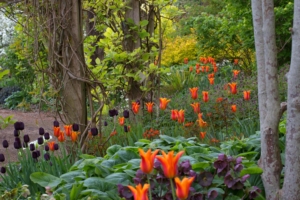
Shade is a good example. In historic Surrey properties, mature trees, neighbouring buildings and established boundaries can all reduce light. Rather than forcing sun-loving plants into those areas, ferns, hostas and other shade-tolerant perennials can create a rich, intentional display.
Where a garden sits on heavy clay, drainage also needs to be considered carefully. Raised beds can help in particular situations while introducing another level to the garden. Plants such as Astilbe, Ligularia and Rodgersia can also make good use of damper areas where conditions suit them.
North-facing gardens need not feel gloomy either. Pale paving, lighter planting and carefully chosen whites, creams and soft foliage can help lift lower-light areas without trying to make the garden something it is not.
Think Carefully About Privacy
Privacy is often one of the biggest concerns in a compact garden, particularly in more densely built areas.
The solution does not always need to be a tall screen around every boundary. When we look at privacy in smaller gardens, it is more useful to identify the particular sightline causing the problem.
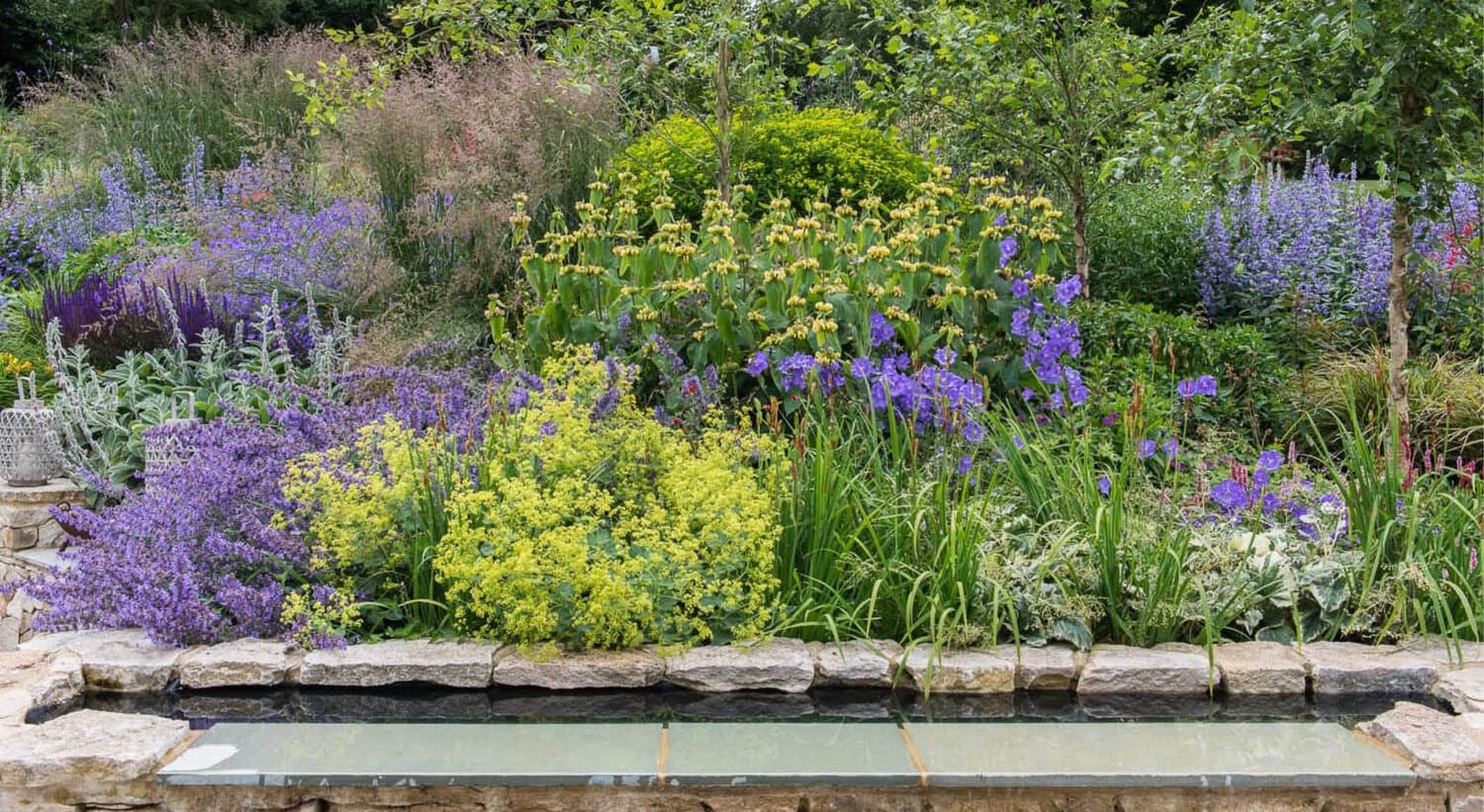
A small tree, layered shrubs or taller perennial planting positioned in the right place may interrupt a view from a neighbouring window or seating area without enclosing the entire garden.
This selective approach can keep more sky visible and create a softer result than relying on tall fencing alone.
Do Not Forget The Practical Details
Storage, circulation and lighting are easy to think about last, but they can have a disproportionate effect in a small garden.
Paths need to feel comfortable to use rather than squeezed into whatever space remains. Where space allows, a generous route through the garden will usually feel much more natural than a very narrow walkway.
Integrated storage can also prevent garden clutter from dominating the space. Built-in seating with storage below, or discreet cupboards incorporated into boundary treatments, can keep everyday essentials accessible without leaving them permanently on show.
Lighting is another area where restraint tends to work best. Rather than illuminating everything, subtle lighting can pick out planting, a tree or a change in level while still making movement through the garden safe after dark.
When Professional Small Garden Design Can Help
Small gardens can be deceptively challenging because every decision carries more weight. A terrace that is slightly too large can leave little room for meaningful planting, while a privacy screen in the wrong position can solve one problem and create another.
This is where professional design can make a real difference. Bringing the layout, planting and practical details together from the outset helps avoid compromises later and ensures the garden has the structure it needs to develop well over time.
Because our horticultural team also provides garden aftercare and maintenance, we see how planting settles, matures and changes over the years. That experience feeds back into the way we design new gardens, particularly where every plant and every metre of space matters.
For gardens in Surrey and West Sussex, familiarity with local growing conditions also matters. Different soils, aspects and microclimates all influence which plants will perform reliably and how the garden should be put together.
The best small gardens are not defined by their size. With thoughtful design, strong planting and a clear understanding of how you want to use the space, even a modest plot can become a characterful and atmospheric garden that feels entirely its own.
If you would like help making more of a smaller garden, contact us to discuss your project.